May 16, 2008

Morgan Collett

The future of Sugar


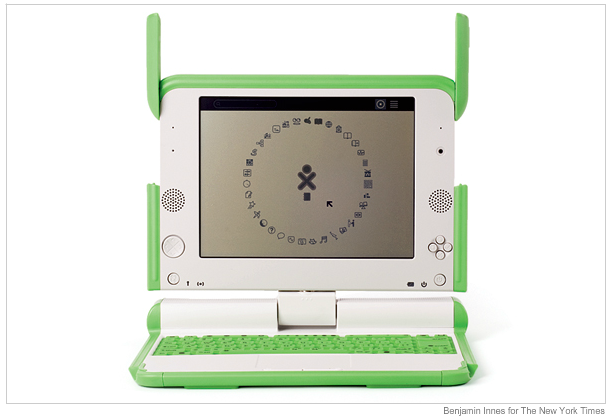
The news is out that OLPC and Microsoft have announced an agreement to “make a dual boot, Linux/Windows, version of the XO laptop”. Nicholas Negroponte’s announcement on community mailing lists (unfortunately HTML only but plain text on the wiki) states:

To enable the Sugar environment to reach as many children as possible, particularly in the poorest areas of the world, OLPC must be able to bid on educational technology contracts, some of which require that Microsoft Windows be able to run on our hardware. The increased volumes will lower the XO-1’s price, already lowest in the industry with capabilities no other laptop shares.

The press release and other news coverage states that trials of XP on the XO will begin in June in some countries.

Engadget’s coverage ends with:

As for Sugar? You’ll still be able to get it, but we have a sinking feeling about its future.

Let’s address that right now.

The future of Sugar

First, some quotes from Negroponte’s announcement:

OLPC is substantially increasing its engineering resources and all software development continues entirely on GNU/Linux. We will continue to work to make Sugar on Linux the best possible platform for education and to invest in our expanding Linux deployments in Peru, Uruguay, Mexico and elsewhere.

No OLPC resources are going to porting Sugar to Microsoft Windows, although as a free software project, we encourage others to do so. The Sugar user interface is already available for Fedora, Debian and Ubuntu Linux distributions, greatly broadening Sugar’s reach to the millions of existing Linux systems. We continue to solicit help from the free software community in these efforts. Additionally, the Fedora, Debian and Ubuntu software environments run on the XO-1, adding support for tens of thousands of free software applications.

Sugar as an upstream project

OLPC wants to “enable the Sugar environment to reach as many children as possible” and part of that goal is to have Sugar running on as many platforms as possible. That requires some degree of decoupling from OLPC’s XO builds.

There is now a Sugar roadmap, inspired by GNOME’s release process. It is still aligned with OLPC’s needs for the XO build release process.

Here is the announcement of the Sugar Labs Foundation, Walter Bender’s approach to Sugar development as an upstream project.

Folks, Sugar isn’t going away. We already know that Sugar on Linux can use the innovative features of the XO-1 that XP cannot. Let’s show the world what we can do, standing on the shoulders of thousands of regular people.

[ Coming soon: Ways to get involved in Sugar and collaborative Activity development ]

(Disclaimer: I work for OLPC. The above opinions are mine.)

by Morgan at May 16, 2008 01:45 PM

OLE Nepal

Some interesting feedback from teachers at Bashuki

In his comprehensive overview of our experience so far, Rabi had mentioned that Bashuki’s School Management (SMC) Committee and teachers had jointly decided to wait for one week after the project launch before allowing students to take the laptops home even though our preference was to let the chidren take the laptops home right away. Their decision was apparently based on the following assumptions:

1. In the past, quite a few students who showed up on the first day of school disappeared within the first week. So it would take at least a week to find out who would be coming to school for sure.

2. Given the socio-economic conditions of the community, protection of laptops at home and during the kids’ daily commute to and from school would be a big problem. So it would be best to first give the children a week to get fully familiar with the machines in the school itself.

It turns out that the teachers  and SMC members had indeed made the right decision in waiting for a week before letting the kids take the lapotps home. In particular, their first assumption turned out to be quite consistent with reality. Needless to say, far fewer grade 2 and 6 students (i.e., grades receiving laptops), dropped out in the first week this year compared to last year; but nevertheless, around 9 students might not show up in the coming months. 

Interestingly, however, the teachers told us that their experience during the past three weeks has led them to completely drop their second assumption.  According to their observation, there have been absolutely no problems related to the protection of laptops. The children and their families are taking very good care of them. And there have been no instances of laptops getting lost, stolen, pawned, or forcibly taken (even if temporarily) by others–these were the potential dangers the SMC members and teachers were quite concerned about. 

Another interesting observation from the teachers relates to attendance. Even though it might a bit too early to tell how attendance is going to be impacted over the long haul, this is what the teachers conveyed to us:

1. Compared to last year, there has beeen a distinct decrease in the % of dropouts during the first three weeks. While 253 students appeared on the first day of school last year, the number dwindled to 190 by the end of the 3rd week. On the other hand, of the 225 students who came to school the first day, 200 have been attending school regularly even at the end of the 3rd week. The teachers feel that the introduction of Epaati is the main reason behind this positive change.

2. Compared to last year, the number of students disappearing from school in the middle of the school day has also drecreased significantly. Apparently, this is generally a notable problem in the school. But now, at least in grades 2 and 6, no one leaves school before the end of the school day. 

3.  There also seems to be some spillover effect on the other grades (perhaps because they have siblings in grade 2 and 6)–the attendance in the other grades has also improved.


It is relevant to note that these are general impressions on the part of the teachers (not the outcome of systematic research!).  Nevertheless, these are encouraging outcomes.

One final intersting comment from the teachers realtes to the unavailability of power adapters for charging at home.  Currently, the kids charge the laptops in school and take them home. There is enough charge for them to do Epaati activities and a little bit more at home; but by the time they are done, it is time for recharging. The teachers strongly recommended that we keep it this way–i.e., not make charging facilities avaiable at home. The reason? To give the kids motivation to come to school regularly! This is indeed an interesting point.

Saurav Dev Bhatta, Education Director

by Saurav Dev Bhatta at May 16, 2008 04:41 AM

May 15, 2008

Mel Chua

My first shell script: bundlemaker

Technical Thing For The Day: Achieved! Today I learned how to write shell scripts - or that is, I wrote my first shell script that didn't involve a straight cut-and-paste from my .history file. (for my parents: a ".history file" is something that contains the last bunch of commands you've typed ...

May 15, 2008 03:00 PM

Bugmastering - a first pass

Yes, this is a poorly written post. I am on the verge of unconsciousness.Right before going to bed (now), I tried my hand at going through the Sugar bugs tonight as a "bugmastering trial." Here are my notes, noting that the location is unstable and this link probably won't lead ...

May 15, 2008 03:00 PM

Jim Gettys

First post after a long absence. (and a Rant!)


Life’s been a bit crazy, including shipping a machine, and being in the clutches of a surgeon several times.  So I’ve not been blogging….

Here’s this morning’s rant: I just installed Kompozer (formerly nvu) to edit some html.  Here we are in 2008, and I still find that KDE and Gnome aren’t sharing simple settings; I end up with a different font on my screen.

Hey, folks, don’t we care about what people think who don’t care what project the application comes from, but are just looking for good tools to use?  I really don’t want to have to go find what magic knob to twist; I’ve already twisted one knob to my satisfaction… Let’s get together, all…

My other rant are for spammers and crackers…  Evil behavior, indeed. Someone broke into my home server. As time is short, I’ve decided to move my web log to to here where others can maintain the software for me; someday I’ll upload my old postings….

by gettys at May 15, 2008 01:03 PM

OLE Nepal

Working on Internal Systems

I haven’t been nearly as active in the OLPC mailing lists discussions and software testing for the last weeks due to a 10-day illness and then some internal office systems stuff that I am still working on. About a day after the glorious start of the Bishwamitra and Bashuki schools, my lower lip started mysteriously swelling. It kept swelling and swelling despite my sweet coaxings and entreaties to shrink. It swelled so large that I couldn’t close my mouth and was extremely was painful. The infection also caused a nasty fever that kept me in bed. I was too tired to do any serious work, but not too tired to learn some super cool vim plugins! like MiniBufExplorer, python omnicomplete, and I finally learned to fully appreciate Visual Mode.

Once I got back to work, I had to attend to some internal systems issues that I had never attended to. After 7 months in business, we didn’t have a file server, print server, contact manager, shared calendar, nothing.  So I have been pretty consumed w/ these matters in addition to working on some touchpad issues that are dogging the kids at Bashuki.

At heart I am an IT Manager/sysadmin and probably always will be. I really enjoy this kind of work and don’t really like being a leader, proposal writer, or schmoozing. I am slowly trying to work my way out of OLE Nepal leadership. I always intended for this organization to be entirely led by Nepalis. When I was still a member of OLPC Nepal, I was one of the leaders their and not entirely comfortable w/ that role. I don’t pretend to know what’s best for Nepal. I have always seen my role to enable talented Nepali leaders to reach their goals. In the case of OLE Nepal, those leaders are Rabi Karmacharya, Saurav Dev Bhatta, Mahabir Pun, and Rajeev Adhikari. And they are extraordinarily talented. When Rabi, myself, and Mahabir started OLE Nepal, I was involved in every single funding proposal, every strategy, and every big decision. The other day, Rabi, Saurav, and Rajeev held a long-term strategy session.  I wasn’t involved at all and extremely happy not to be. Instead I created a Debian init script for Fedora-Commons, got the Redmine project management app, up and running, and learned how to use update-rc.d. I am infinitely more happy working on the latter type of problems than the former.

So sysadmin stuff:

Office Wiki

I have set up MoinMoin for our internal officewiki. The problem with Mediawiki is that it has no access controls. We need to document our hiring process but those not involved don’t need to see that information. I don’t want to make all internal the sysadmin documentation accessible to all staff. They don’t need to see what security settings I have on X server and probably don’t want to. MoinMoin does have access controls and it is pretty easy to backup.

Project Management:

I looked at Trac, installed it, and well . . . I don’t like it.  At all. It was a pain to configure and pretty esoteric. I set up Redmine and it was an absolute breeze and offers a lot more functionality. I was bit wary because it is aRuby on Rails app and I have heard that Ruby on Rails has stability issues. I haven’t really stress tested it yet, so we shall see. I am using Redmine w/ mod_rails and apache. Mod_rails requires the pre-fork version of Apache 2.2 . I don’t really understand the difference between prefork and mpm but I do understand that the Apache documentation is consistently confusing.

Redmine is great. Each project gets its own wiki, forums, roadmap, gantt charts, and calendar. We aren’t using it w/ Subversion or git yet.  We will see how that works.

I would like to use the OLPC Trac but it is reallly slow across our office Internet connection. We also intend to use redmine for our internal testing of apps. The folks doing the application testng will be fairly non-technical and I think they will have a quite a bit of trouble using Trac.  Also OLPC’s Trac only have milestones for the Sugar releases. I can’t create milestones for E-Paati releases.

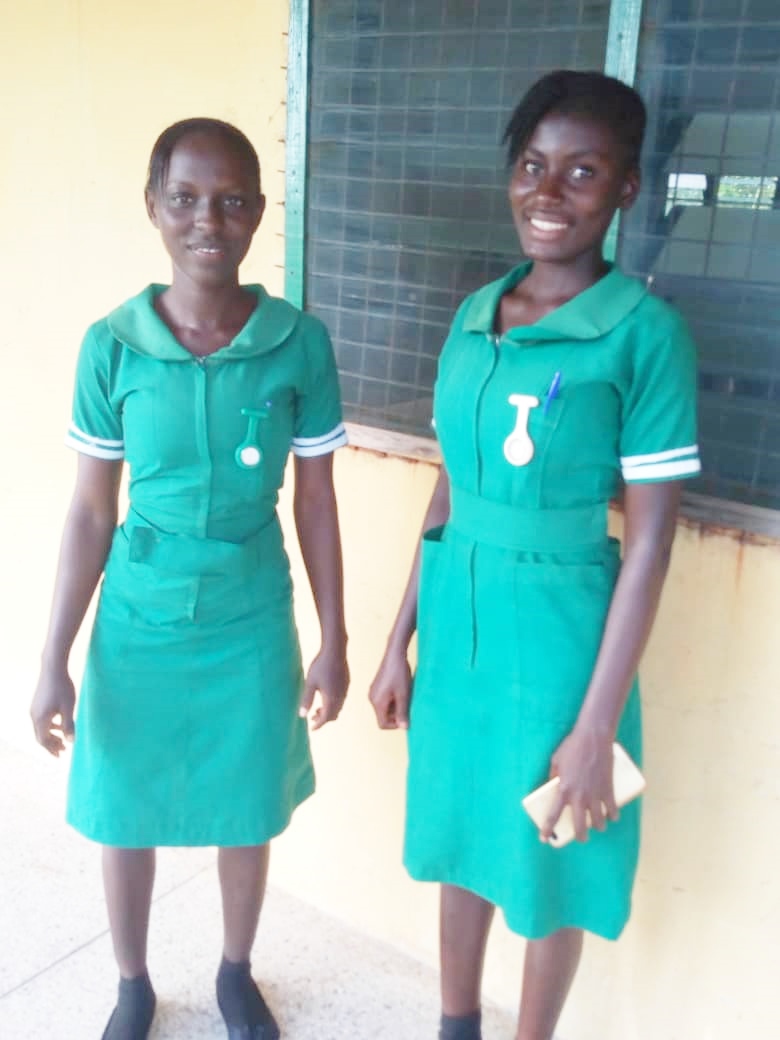
Asmita and Priyata Bhatta, software testers/voices of E-Paati activities

They are so cute!

Also, we will use Redmine to manage sysadmin and office administration tasks. Examples of this are: buy me 3 adapters! My mouse doesn’t work! I need a ride to the pilot school on Monday together w/ the Secretary of Education, please arrange.

It is easy to lose track of this stuff even w/ a small office. But — the office is growing rapidly. We are hiring 5-6 more folks in the next couple months. That should put our total full-time staff up to  22 people. We also have a # of folks that want to volunteer on a regular basis, we have two interns right now. So all these people requires more structure! I am amazed that we have a lot of people compared to OLPC organization itself. Well, I can tell you we aren’t slacking. We’re here from 9 am - 7/8 pm. Rabi and I usually log 12-14 hour days, Om works for several hours before he even shows up to the office, I constantly harrass Ties to do something amazing w/ Squeak.

We have a lot of people because content development and implementation are extremely resource-intensive! We have 4 developers + 2 graphic designers + 1 curriculum designer working full-time on content development. We have 3 technical people working on systems administration + networking and will add two more sysadmin/network admins in the next two months. We will also hire a power engineer to work on sustainable power solutions for rural schools.

I digress, back to sysadmin stuff. I have set up zimbra for our shared calendar and shared contacts but I am wondering if we should just use a shared Google Calendar and Google Contacts if they exist. Zimbra is awesome but it requires its own server because it has specially customized version of Apache that won’t play well w/ other versions of Apache. So maybe it will be back to google calendar, which does have a plugin for redmine . . .

I still need to set up a Samba file and print server, document our internal office and school network, and source control for our E-Pustakalaya application, yadda yadda. But I am making progress :)

My next goal after Samba server will be to set up an LDAP server using EBox. It promises to be a user friendly tool for LDAP management. And I really need to learn LDAP but it needs to be easy for others in the office to manage, i.e. someone in addition to me like Sulochan or Dev.

A few more thoughts in this ramble. I am extremely impressed w/ Redmine and probably w/ Ruby on Rails in general. Redmine is less than a year old and it already has a ton more functionality and ease of use than Trac. I have looked at the code and it appears that redmine is able to easily reuse code from other rails apps rather than creating it from scratch while most of the code for Trac seems to have been created for Trac. Perhaps Django provides this same advantage.

I am working on the touchpad issue but sidetracked for this week so I could finally get some internal sysadmin stuff done, otherwise it may never get . Thanks to Mstone, sj, tomeu and others for looking at this problem.

by bryan at May 15, 2008 08:58 AM

May 13, 2008

Ivan Krstić

Sic Transit Gloria Laptopi


Photo: Walter shows me improvements to the Record activity at the Lima coastline, Peru.

I’ve been displeased with the quality of community discourse surrounding the recent OLPC announcement of moving to Windows as the OS platform. I decided to withhold comment at the time, and was swayed only by the half-dozen volunteers mailing me personally to ask whether all their work had been in vain. It hadn’t. And then I left to travel for a few days.

I just caught up with my mail and RSS feeds, and what I’ve read has moved me from displeased to angry. So I’m going to comment after all, and it’ll be my last OLPC-related essay for the foreseeable future. But first, some background.

The beginning
Throughout his life, Nicholas Negroponte worked with education and technology luminaries like Alan Kay and Seymour Papert. In the early 80s, Nicholas and Seymour ran a pilot program backed by the French government that placed Apple ][ machines in a suburban computing center in Dakar, Senegal. The project was a spectacular flop due to mismanagement and personality conflicts. In '83, barely a year after the experiment started, MIT's Technology Review magazine published its damning epitaph:

Naturally, it failed. Nothing is that independent, especially an organization backed by a socialist government and staffed by highly individualistic industry visionaries from around the world. Besides, altruism has a credibility problem in an industry that thrives on intense commercial competition.

By the end of the Center's first year, Papert had quit, so had American experts Nicholas Negroponte and Bob Lawler. It had become a battlefield, scarred by clashes of management style, personality, and political conviction. It never really recovered. The new French government has done the Center a favor in closing it down.

But both Nicholas and Seymour emerged from the ashes of the Dakar pilot with their faith in the premise of children learning naturally with computers intact. Armed with the lessons from the Senegal failure, it was perhaps only a matter of time before they tried again.

Indeed, Seymour tried again only a couple of years later: the Media Lab was founded in 1985 and immediately started supporting Project Headlight, an attempt to infuse constructionist learning into the complete curriculum of the Hennigan school, a public elementary school in Boston consisting mostly of minority students.

Fast forward almost two decades, to around 2000. Former Newsweek foreign correspondent turned philanthropist, Bernie "one-man United Nations" Krisher convinced Nicholas and his wife Elaine to join Bernie's program of building schools in Cambodia. Nicholas bought used Panasonic Toughbooks for one school, and his son Dimitri taught there for a time.

"Surely," the thinking went, "there has to be a way to scale this." And the rest of the story is familiar: Nicholas wooed Mary Lou Jepsen while she was interviewing for a faculty position at the Lab, and told her about his crazy idea for an organization called One Laptop per Child. She came on board as CTO. Towards the end of 2005, the organization left stealth mode with a bang: Nicholas announced it with Kofi Annan, Nobel Peace Prize winner and then-Secretary-General of the United Nations, at a global summit in Tunis.

The part that bears repeating is that Nicholas' constructionism-based computer learning project in Senegal was a complete disaster: modulo commentary on the personalities and egos involved, it demonstrated nothing about anything. And Krisher's Cambodia project, the one evidently successful enough to motivate Nicholas to actually start OLPC, used off-the-shelf laptops running Windows without any constructivist customizations of the OS whatsoever. (They did have some constructionist tools installed as regular applications.)

What we know
The truth is, when it comes to large-scale one-to-one computing programs, we're completely in the dark about what actually works, because hey, no one has done a large-scale one-to-one computing program before. Mako Hill writes:

We know that laptop recipients will benefit from being able to fix, improve, and translate the software on their laptops into their own languages and contexts. ... We can help foster a world where technology is under the control of its users, and where learning is under the terms of its students — a world where every laptop owner has freedom through control over the technology they use to communicate, collaborate, create, and learn. It is the reason that OLPC's embrace of constructionist philosophy is so deeply important to its mission and the reason that its mission needs to continue to be executed with free and open source software. It is why OLPC needs to be uncompromising about software freedom.

This kind of bright-eyed idealism is appealing, but alas, just not backed by fact. No, we don't know that laptop recipients will benefit from fixing software on their laptops. Indeed, I bet they'd largely prefer the damn software works and doesn't need fixing. While we think and even hope that constructionist principles, as embodied in the free software culture, are helpful to education, presenting the hopes as rooted in fact is simply deceitful.

As far as I know, there is no real study anywhere that demonstrates constructionism works at scale. There is no documented moderate-scale constructionist learning pilot that has been convincingly successful; when Nicholas points to "decades of work by Seymour Papert, Alan Kay, and Jean Piaget", he's talking about theory. He likes to mention Dakar, but doesn't like to mention how that pilot ended — or that no real facts about the validity of the approach came out of it. And there sure as hell doesn't exist a peer-reviewed study (or any other kind, to my knowledge) showing free software does any better than proprietary software when it comes to aiding learning, or that children prefer the openness, or that they care about software freedom one bit.

Keeping that in mind, Richard Stallman's missive on the subject just riled me up:

Proprietary software keeps users divided and helpless. Its functioning is secret, so it is incompatible with the spirit of learning. Teaching children to use a proprietary (non-free) system such as Windows does not make the world a better place, because it puts them under the power of the system's developer — perhaps permanently. You might as well introduce the children to an addictive drug.

Oh, for fuck's sake. You really just employed a simile comparing a proprietary OS to addictive drugs? You know, ones causing actual bodily harm and possibly death? Really, Stallman? Really?

If proprietary software is half as good as free software at aiding children's learning, you're damn right it makes the world a better place to get the software out to children. Hell, if it doesn't actively inhibit learning, it makes the world a better place. The problem is that Stallman doesn't appear to actually give an acrobatic shit about learning, and sees OLPC as a vehicle for furthering his political agenda. It's shameful, the lot of it.

While we're on the subject
One of the favorite arguments of the free software and open source community for the obvious superiority of such software over proprietary alternatives is the user's supposed ability to take control and modify inadequate software to suit their wishes. Expectedly, the argument has been often repeated in relation to OLPC.

I can't possibly be the only one seeing that the emperor has no clothes.

I started using Linux in '95, before most of today's Internet-using general public knew there existed an OS outside of Windows. It took a week to configure X to work with my graphics card, and I learned serious programming because I later needed to add support for a SCSI hard drive that wasn't recognized properly. (Not knowing that C and kernel hacking are supposed to be "hard", I kept at it for three months until I learned enough to write a patch that works.) I've been primarily a UNIX user since then, alternating between Debian, FreeBSD and later Ubuntu, and recently co-writing a best-selling Linux book.

About eight months ago, when I caught myself fighting yet another battle with suspend/resume on my Linux-running laptop, I got so furious that I went to the nearest Apple store and bought a MacBook. After 12 years of almost exclusive use of free software, I switched to Mac OS X. And you know, shitty power management and many other hassles aren't Linux's fault. The fault lies with needlessly secretive vendors not releasing documentation that would make it possible for Linux to play well with their hardware. But until the day comes when hardware vendors and free software developers find themselves holding hands and spontaneously bursting into one giant orgiastic Kumbaya, that's the world we live in. So in the meantime, I switched to OS X and find it to be an overwhelmingly more enjoyable computing experience. I still have my free software UNIX shell, my free software programming language, my free software ports system, my free software editor, and I run a bunch of free software Linux virtual machines. The vast, near-total majority of computer users aren't programmers. Of the programmers, a vast, near-total majority don't dare in the Land o' Kernel tread. As one of the people who actually can hack my kernel to suit, I find that I don't miss the ability in the least. There, I said it. Hang me for treason.

My theory is that technical people, especially when younger, get a particular thrill out of dicking around with their software. Much like case modders, these folks see it as a badge of honor that they spent countless hours compiling and configuring their software to oblivion. Hey, I was there too. And the older I get, the more I want things to work out of the box. Ubuntu is getting better at delivering that experience for novice users. Serious power users seem to find that OS X is unrivaled at it.

I used to think that there was something wrong with me for thinking this. Then I started looking at the mail headers on mailing lists where I hang out, curious about what other folks I respect were using. It looks like most of the luminaries in the security community, one of the most hardcore technical communities on the planet, use OS X.

And lest you think this is some kind of Apple-paid rant, I'll mention Mitch Bradley. Have you read the story of Mel, the "real" programmer? Mitch is that guy, in 2008. Firmware superhacker, author of the IEEE Open Firmware standard, wrote the firmware that Sun shipped on its machines for a good couple of decades, and in general one of the few people I've ever had the pleasure of working with whose technical competence so inordinately exceeds mine that I feel I wouldn't even know how to start catching up. Mitch's primary laptop runs Windows.

Sleight of hand
But really, I digress. The point is that OLPC was supposed to be about learning, not free software. And the most upsetting part of the Windows announcement is not that it exposed the actual agendas of a number of project participants which had nothing to do with learning, but that Nicholas' misdirection and sleight of hand were allowed to stand.

The whole "we're investing into Sugar, it'll just run on Windows" gambit is sheer nonsense. Nicholas knows quite well that Sugar won't magically become better simply by virtue of running on Windows rather than Linux. In reality, Nicholas wants to ship plain XP desktops. He's told me so. That he might possibly fund a Sugar effort to the side and pay lip service to the notion of its "availability" as an option to purchasing countries is at best a tepid effort to avert a PR disaster.

In fact, I quit when Nicholas told me — and not just me — that learning was never part of the mission. The mission was, in his mind, always getting as many laptops as possible out there; to say anything about learning would be presumptuous, and so he doesn't want OLPC to have a software team, a hardware team, or a deployment team going forward.

Yeah, I'm not sure what that leaves either.

There are three key problems in one-to-one computer programs: choosing a suitable device, getting it to children, and using it to create sustainable learning and teaching experiences. They're listed in order of exponentially increasing difficulty.

The industry didn't want to tackle the first one because there was little profit in it. OLPC successfully made them do it in the most effective way possible: by threatening to steal their lunch. But industry laptop manufacturers still don't want to tackle deployment, because it's really, really fucking hard, isn't within a 100-mile radius of their core competency, and generally has a commercial ROI that makes baby Cthulhu cry.

Peru's first deployment module consisted of 40 thousand laptops, to be deployed in about 570 schools across jungles, mountains, plains, and with total variance in electrical availability and uniformly no existing network infrastructure. A number of the target schools are in places requiring multiple modes of transportation to reach, and that are so remote that they're not even serviced by the postal service. Laptop delivery was going to be performed by untrusted vendors who are in a position to steal the machines en masse. There is no easy way to collect manifests of what actually got delivered, where, and to whom. It's not clear how to establish a procedure for dealing with malfunctioning units, or those dead on arrival. Compared to dealing with this, the technical work I do is vacation.

Other than the incredible Carla Gomez-Monroy who worked on setting up the pilots, there was no one hired to work on deployment while I was at OLPC, with Uruguay's and Peru's combined 360,000 laptop rollout in progress. I was parachuted in as the sole OLPC person to deal with Uruguay, and sent to Peru at the last minute. And I'm really good at thinking on my feet, but what the shit do I know about deployment? Right around that time, Walter was demoted and theoretically made the "director of deployment," a position where he directed his expansive team of — himself. Then he left, and get this: now the company has half a million laptops in the wild, with no one even pretending to be officially in charge of deployment. "I quit," Walter told me on the phone after leaving, "because I can't continue to work on a lie."

It's not like OLPC was caught unawares, or somehow forgot that this was going to be an issue. I wrote in an internal memo in December:

We have multiple concurrent rollouts of differing scale in progress — Uruguay with eight thousand machines, G1G1 with potentially a quarter million — and with at least Peru and Mongolia on the horizon within a month from now. We have no real support infrastructure for these rollouts, our development process is not allocating any time for dealing with critical deployment issues that (will inevitably) come up, and we have no process for managing the crises that will ensue. I wish I could say this is the bulk of our problems, but I mention these first simply because I predict it's these deployments that will impose the heaviest burden on this organization in the coming months — a burden we're presently entirely unprepared to handle.

...

We still have not a single employee focusing on deployment, helping to plan it, working with our target countries to learn what works and what doesn't. Evidently our "deployment plan" is to send whichever hotshot superhacker we have available to each country such that he may fix any problems that arise on the spot. If that is not in fact our plan, then we have no plan at all.

That OLPC was never serious about solving deployment, and that it seems to no longer be interested in even trying, is criminal. Left uncorrected, it will turn the project into a historical information technology fuckup unparalleled in scale.

As for the last key problem, transforming laptops into learning is a non-trivial leap of logic, and one that remains inadequately explained. No, we don't know that it'll work, especially not without teachers. And that's okay — the way to find out whether it works might well be by trying. Sometimes you have to run before you can walk, yeah? But most of us who joined OLPC believed that the educational ideology behind the project is what actually set it apart from similar endeavors in the past. Learning which is open, collaborative, shared, and exploratory — we thought that's what could make OLPC work. Because people have tried plain laptop learning projects in the past, and as the New York Times noted on its front page not so long ago, they crashed and burned.

Nicholas' new OLPC is dropping those pesky education goals from the mission and turning itself into a 50-person nonprofit laptop manufacturer, competing with Lenovo, Dell, Apple, Asus, HP and Intel on their home turf, and by using the one strategy we know doesn't work. But hey, I guess they'll sell more laptops that way.

Broken windows theory
I've tried to establish already that there's no evidence that free software provides a superior learning experience when compared to a proprietary operating system. This point bears some elaboration. Bernie Innocenti, until recently the CTO for the fledgling OLPC Europe, a few days ago wrote:

I myself wouldn't oppose a Windows port of Sugar. I would never waste my time on it, or encourage anyone to waste their time on it, but it's free software and thus anyone is free to port it to anything they wish.

Stallman similarly called a Windows port of Sugar "not a good thing to do". Here's the thing: such a port is only a waste of time if free software is not the means here, but an end. At Nicholas' solicitation, I wrote an internal memo on software strategy in early March. It was co-signed by Marco Pesenti Gritti, the inimitable Sugar team lead. I am not at liberty to reproduce the entire document, but I will quote the most relevant section with minimal redactions:

... We [argue strongly that we should] decouple the Sugar UI from the Sugar technologies we’ve developed such as sharing, collaboration, the presence service, the data store, and so forth. We may then make those services run well in a regular Linux desktop environment and redefine the Sugar activity concept to simply be any Linux desktop application capable of using the Sugar services. The Sugar UI itself could, optionally and at a later date, be provided as a graphical launcher, perhaps developed by the community.

The core mistake of the present Sugar approach is that it couples phenomenally powerful ideas about learning — that it should be shared, collaborative, peer to peer, and open — with the notion that these ideas must come presented in an entirely new graphical paradigm. We reject this coupling as untenable.

Choosing to reinvent the desktop UI paradigm means we are spending our extremely overconstrained resources fighting graphical interfaces, not developing better tools for learning. … It is most important to recognize that the graphical paradigm changes are inessential both to our core mission and to the Sugar core ideas.

We gain a plethora of benefits from detaching the technologies that directly support the mode of learning we care about from the Sugar UI. Notably, it becomes far easier to spread these ideas and technologies across platforms — our UI components are the hardest parts to port. If the underlying Sugar technologies were made easily available for all major OSes, we could leverage the creativity and work of the wider development community to build applications on top of our core offerings, creating a diverse ecosystem of powerful learning tools. Those tools could then be used by learners globally and on any computer, XO or otherwise. This should have been our aim all along. Many of the technologies we’ve built would be welcomed with arms wide open into modern Linux desktops, and a large number of developers would likely get engaged with them if we provided the possibility. In contrast to the current situation, such a model must be the direction where we take things: OLPC benevolently steering development which is mostly done by the community.

Finally, with regard to the politically-sensitive question of OLPC’s commitment to open source, we think there is a simple and uncomplicated answer: OLPC’s policy should be that all OLPC-developed software is open source and uses open standards and open formats. We don’t think a stronger commitment is necessary. Our preference for open source should stem solely from the conviction that it provides a better learning environment than closed-source alternatives. As such, having an open source cross-platform set of core technologies for building collaborative learning applications makes a tremendous amount of sense. But fundamentally, requiring that a particular UI or even OS are used seems entirely superfluous; we should be satisfied with any environment where our core technologies can be used as building blocks for delivering the learning experience we care so strongly about.

At the end of the day, it just doesn’t matter to the educational mission what kernel is running Sugar. If Sugar itself remains open and free — which, thus far, has never been in question — all of the relevant functionality such as the ‘view source’ key remains operational, on Windows or not. OLPC should never take steps to willingly limit the audience for its learning software. Windows is the most widely used operating system in existence. A Windows-compatible Sugar would bring its rich learning vision to potentially tens or hundreds of millions of children all over the world whose parents already own a Windows computer, be it laptop or desktop. To suggest this is a bad course of action because it’s philosophically impure is downright evil.

And hey, maybe a Windows version of Sugar gets kids sufficiently interested in computer innards to actually want to switch to Linux. Trolltech, the company behind the Qt graphical toolkit, was recently purchased by Nokia and announced it’ll be adding platform support for the mobile version of Windows, apparently to accusations of treason in the free software community. But Trolltech’s CTO Benoit Schillings doesn’t think that’s right:

Some critics are concerned that Trolltech’s support for Windows Mobile could limit the growth of mobile and embedded Linux technologies, but Schillings sees things differently. By enabling application developers to create a single code base that can seamlessly move across platforms, he says that Trolltech is making it easier for companies that are currently using Windows Mobile to transition to Linux, which he thinks will mean more adoption of the open source operating system in the long run.

The man speaks wisely.

Now, pay close attention: while I’m unequivocally enthusiastic about Sugar being ported to every OS out there, I’m absolutely opposed to Windows as the single OS that OLPC offers for the XO. The two matters are completely orthogonal, and Nicholas’ attempt to conflate them by calling the open source community “fundamentalists” (and watching the community foam at the mouth instead of picking apart his logic) is just another bit of misdirection. Not that anyone should really feel offended, since he’s made it a habit to call his employees terrorists.

OLPC should be philosophically pure about its own machines. Being a non-profit that leverages goodwill from a tremendous number of community volunteers for its success and whose core mission is one of social betterment, it has a great deal of social responsibility. It should not become a vehicle for creating economic incentives for a particular vendor. It should not believe the nonsense about Windows being a requirement for business after the children grow up. Windows is a requirement because enough people grew up with it, not the other way around. If OLPC made a billion people grow up with Linux, Linux would be just dandy for business. And OLPC shouldn’t make its sole OS one that cripples the very hardware that supposedly set the project’s laptops apart: released versions of Windows can neither make good use of the XO power management, nor its full mesh or advanced display capabilities.

Most importantly, the OS that OLPC ships should be one that embodies the culture of learning that OLPC adheres to. The culture of open inquiry, diverse cooperative work, of freely doing and debugging — this is important. OLPC has a responsibility to spread the culture of freedom and ideas that support its educational mission; that cannot be done by only offering a proprietary operating system for the laptops.

Put differently, OLPC can’t claim to be preoccupied with learning and not with training children to be office computer drones, while at the same time being coerced by hollow office drone rhetoric to deploy the computers with office drone software. Nicholas used to say the thought of the XOs being used to teach 6-year olds Word and Excel made him cringe. Apparently, no longer so. Which is it? The vacillation needs to stop. As they say in the motherland: shit or get off the pot.

How to go forward
Here’s a paragraph from one of my last e-mails to Nicholas, sent shortly after I resigned:

I continue to think it’s a crying shame you’re not taking advantage of how OLPC is positioned. Now that it’s goaded the industry into working on low-cost laptops, OLPC could become a focus point for advocating constructionism, making educational content available, providing learning software, and keeping track of worldwide [one-to-one] deployments and the lessons arising from them. When a country chooses to do [a one-to-one computer program], OLPC could be the one-stop shop that actually works with them to make it happen, regardless of which laptop manufacturer is chosen, banking on the deployment plans it’s cultivated from experience and the readily available base of software and content it keeps. In other words, OLPC could be the IBM Global Services of one-to-one laptop programs. This, I maintain, is the right way to go forward.

I’m trying to convince Walter not to start a Sugar Foundation, but an Open Learning Foundation. For those who still care about learning in this whole clusterfuck of conflicting agendas, the charge should be to start that organization, since OLPC doesn’t want to be it. Having a company that is device-agnostic and focuses entirely on the learning ecosystem, from deployment to content to Sugar, is not only what I think is sorely needed to really take the one-to-one computer efforts to the next level, but also an approach that has a good chance of making the organization doing the work self-sustaining at some point.

So here’s to open learning, to free software, to strength of personal conviction, and to having enough damn humility to remember that the goal is bringing learning to a billion children across the globe. The billion waiting for us to put our idiotic trifles aside, end our endless yapping, and get to it already.

Let’s get to it already.

My thanks to Walter Bender and Marco P. Gritti for reading drafts of this essay.

by Ivan Krstić at May 13, 2008 09:55 PM

May 12, 2008

Sayamindu Dasgupta

Crossing milestones…

Last Saturday, I appeared for what was the last examination of our four year BTech degree course. College life has ended for me, at least for the time being. It was fun while it lasted, bordering on insanity sometimes (can you imagine “normal people” participating in a sport which involves pouring rotten, and really stinky paper-maché over each other’s heads ?). The last few days were bitter-sweet, with a lot of memories, some of them happy, some of them not so happy, coming back all at once. I guess, in the end, all of us had a wonderful four years, years that made us mature, strong, and much more acquainted with the ways of the world. Thanks to everyone who has been beside me during the past four years, through all my ups, downs, successes and failures. Thanks a lot .

This week, I’m starting full time with OLPC. Apart from facilitating and helping with the l10n and i18n efforts (which I have been doing for the past six months), I also expect to start helping out with various parts of the OLPC software stack.

This part of life is called: interesting :-).

by Sayamindu at May 12, 2008 06:06 PM

Philip Van Hoof

Implementing your Vala interfaces in GObject/C

In Vala you can define interfaces just like in C# and Java. Interfaces imply that you can have class types that implement one or more such interfaces. Vala does not force you to implement its interfaces in Vala. You can also implement them in good-old GObject C.

Here’s a detailed example how you implement a type that implements two Vala interfaces in GObject/C:

by pvanhoof at May 12, 2008 01:57 PM

OLPC games

May 2008 Site Activity Update

The OLPC Games team are all currently busy with graduation or working at startup companies, and so the site has not had a lot of attention lately. Particularly, we understand a few of the games may not be working. We’ll be working on getting the core games working very soon. Thanks for being patient. And please check out this useful site that goes over the current state of functionality of available XO activities.

by admin at May 12, 2008 03:39 AM

May 10, 2008

Ivan Krstić

May 09, 2008

Philip Van Hoof

Switching to multiple threads, with a non-thread-safe resource

Your application used to be single threaded and is consuming a resource that is not thread-safe. You’re splitting your application up into two or more threads. Both threads want to consume the non-thread-safe resource.

In this GNOME-Live item I explain how to use GThreadPool for this.

It’s a wiki so if you find any discrepancies in the sample and or text, just correct them. I’m subscribed so I’ll review it that way.

The GNOME-Live item is done in a similar way to the item about using asynchronous DBus bindings and the AsyncWorker item.

by pvanhoof at May 09, 2008 10:17 AM

May 08, 2008

OLE Nepal

First Week at the two Test Schools

This is a compilation of observations from the first week of the laptop implementation at the two rural schools in Nepal — Bashuki and Bishwamitra Ganesh. After the launch of the project on April 25th, we visited the schools for the next six days, spending entire days working with the teachers and observing the classrooms. This was the second part of the teacher training program, with the first part being the 4 day residential program that was help from March 29 till April 1. Typically, the day would start with discussion of the day’s lesson plans with the teachers, and then we would proceed to observe the classes where the teachers used the learning activities developed by OLE Nepal in the daily teaching. The details of the teacher training program can be found in Dr. Bhatta’s post. Here I will write about general observations about the children and the laptops at the two schools.

Bashuki School

Between the two test schools, Bashuki is undoubtedly the more challenging one. The school located near a hilltop in Lakurebhanjyang serves a community of Tamang people, an indigenous group that inhabit the hilly region. Most students come from poor families that depend on agriculture and menial work to make ends meet. The literacy rate is quite low, but the teachers are determined to change this. However, they face a daunting uphill task to educate children from villages where sending kids to school means losing extra hands to work the fields. Furthermore, out of the 10 teachers, only one is from the local community, while the rest have to trek up at least 1 hour each day to reach the school. In this respect, the school is quite detached from the community. Most teachers do not speak the local Tamang language, while few understand it. Overall, it is not easy for the teachers to mix in with the local people and interact with them.

We had distributed a total of 75 laptops - 39 to grade 2 students, and 36 to grade 6 students. During the first week of school, the attendance was not very encouraging. Most of the week there were between 25-30 students in grade 2, and 20-25 students in grade 6. This could be due to the fact that there was no clear indication of when classes were supposed to begin, a typical problem faced by schools all over Nepal. According the ministry, public schools across the nation were supposed to start classes on April 17th, but due to various reasons, this rarely happens in most schools. Ironically, schools are required keep admissions open till mid-May. To make things worse, textbooks had not been delivered to the schools till date. These are ground realities that teachers and school administrations have to deal with in educating children in rural areas. Nevertheless, it was quite surprising that even the lure of the cute laptops were not enough to entice the students to school. The teachers told us that full attendance is a rarity because siblings take turns between going to school and staying home to help in the fields and do household chores.

The School Management Committee (SMC) and school administration had jointly decided not to send the laptops home with the students during the first week. They wanted the children to get more familiar with the laptops before they take them home with them. While we first were not happy with the plan, in retrospect, it turned out to be a good idea given the number of students that did not show up at school after the distribution day. Since the students had limited time with the XO’s during this week, they were not quite familiar with the laptops in the classroom.

Grade 6 students at Bashuki

Bishwamitra School

This school located in a wooded area in Jyamirkot serves a mixed community consisting of Brahmin, Chhetri, Newar, Tamang and Dalit groups. The school has a core group of dedicated teachers who have been affiliated with the school for over 20 years. Three of the twelve teachers had at one time attended the school. Almost all the teachers hail from the surrounding villages, and they are very tied to the local community. They have close relation with the parents and the community. People in the community put high value on education. Hence, we see that it will be easier to successfully implement the project in this school.

Students from both grades were allowed to take the laptops home from the very first day. Out of the 38 students in grade 6 and 22 in grade 2, almost all of them were present throughout the first week of classes. The teachers conducted regular classes for all grades during this period.

Since the students had extra personal time at home with the XO’s they were very much familiar using the XO’s in classrooms. Even the second graders were navigating around the XO without much problem, and were able to get to the activities that the teachers were referring to. The sixth graders had tried out other activities besides the E-Paati activities developed by OLE Nepal.

Grade 2 students at Bashuki

Dissection of Cursor Problem

We encountered the jumpy cursor problem at both schools, but there were many more cases at Bashuki. At Bishwamitra, out of 60 laptops, there were approximately 5-6 reports of jumpy cursor problem. At Bashuki, the problem was found in more than half the laptops. We will go back to the schools this week and report back on the status of the problem. We also plan to do a more systematic collection of data regarding the cursor problem.

One factor contributing to the higher number of cases at Bashuki is dust. The school area is quite dusty, and in the afternoon, when the wind picks up, there would be so much dust in the air that at times it becomes very difficult to walk outside with your eyes open. It takes only a few minutes before a layer of dust settles on any surface. The classrooms have windows made out of wood, and at least one or two have to be left open to let light into the rooms. As a result, dust particles gather on the XO’s, and could be felt them on the touch pad. Students at the schools were seen carrying soft pieces of cloth to wipe the screen and touchpad.

Dust by itself may not have been a problem. In couple cases, the jumpy cursor problem was fixed when dust was wiped from the touchpad. But when the laptops were returned to the kids, the jumpy cursor problem resurfaced. That is when I realized that a combination of sweaty fingers and dust could have made it worse. Most of the kids had sweaty hands, and with dust all around, their finger tips were not clean. Since the touchpad work by sensing the capacitance of the finger, moist or sweaty fingers can be problematic.

Since the other school, Bishwamitra in not in a dusty location, the cursor problem was not as pervasive. Furthermore, the school was located in a much cooler location, and we noticed that the kids had cleaner hands. The couple cases of jumpy cursor problem at this school were resolved by simply rebooting the laptops.

In almost all cases, the jumpy cursor problem could be temporarily fixed by restarting the laptops. However, this was temporary, and the problem would return shortly after the kids start using the laptops.

Next Steps

Bashuki School, with all its problems, represents a typical government schools in Nepal. Bishwamitra School is more of an exception, and we cannot expect to find schools like that when we expand the project in other districts. So, our challenge is to find ways to make the project successful at Bashuki, and the lessons learned there will be invaluable to us when we reach out to similar schools in far flung districts in the country. So how do we do it? Obviously, it requires a lot of effort from all stakeholders, including teachers and SMC.

We can start off by having regular interactions between teachers of the two schools. In fact this was proposed by teachers at Bishwamitra. Teachers from each school can arrange to visit the other school. Such visits will help teachers at Bashuki learn from the way things are done at Bishwamitra, while the teachers at Biswhamitra can learn about the problems faced by their counterparts at Bashuki and make suggestions to improve the situation.

We need to start working closely with the community in Bashuki with the help of the SMC and the school administration. It is important for the community to understand the project and own it. The teachers had organized an orientation program the week before the launch of the project, but the turnout was not very good. It is also important that we have someone communicate with the parents in the local Tamang language. Since no one in our team knows the language, we plan to work with the only teacher who hails from the local community. Also, the SMC consists of mostly local Tamang leaders who can also help in reaching out to the community.

We will also start collecting attendance data so that we can better understand the attendance pattern. This will be essential if we are to work with the community to figure out how to increase attendance in the classes. We will also start collecting real data regarding the various technical problems that are encountered at the schools.

Grade 2 students at Bashuki

Network and Power

The students have not yet reached the point where they are utilizing the networking capabilities of the laptops. While this may seem odd, we have to understand that these children have never touched a computer before. They are still intrigued by the various games and activities that they can access in the laptop without connecting to the network. We will soon work with the teachers to demonstrate the mesh networking capabilities of the laptops, as well as show them how to access the E-Pustakalaya (electronic library) that we have built. Both the electronic library and the Internet will be accessed via the wireless network that we have set up to connect the schools to the Department of Education and our office.

We have not been able to have the Internet accessible from the homes. This is the next challenge for our networking team. The students live as far as 45 minutes walk from the school, and due to the hilly terrain, we have not been able to come up with an affordable solution to connect the homes to the school servers or access points.

Currently, the power adapters remain at the schools in the charging racks. This measure was taken to prevent the loss of adapters, which can easily be misplaced or lost. The laptops are charged fully in the schools before the children take them home after schools. This will give the children at least couple hours of usage time at home. We are currently seeking replacement adapters, and when we do find them, we plan to provide one each for the children to keep at home. Then they will not have to carry the adapters to and from the schools, and also will not have to plug and un-plug the adapter daily from the AC socket.

Wish List

  1. Cursor, Cursor, Cursor. This is the main problem we have faced so far. It is so disheartening to watch the kids trying to navigate the cursor only to have it jump to a corner. If we cannot find a solution to this problem, we may not be able to get a meaningful outcome from this project. Having an external USB mouse is not practical due to lack of desk space. OLPC should consider adding pointing stick as an option for navigation.
  2. On-screen volume indicator that shows what level the volume is at when the volume buttons are pressed.
  3. The frame should not automatically appear when the cursor is moved to the sides or corners. This is quite unnecessary especially since there already is the key on upper right hand side of the keyboard to do get the frame to appear. I read that this auto-frame feature can be disabled, but we have yet to test it out here.
  4. OLPC should ship two power adapters with each XO - one to be kept at school, and one at home. This will not only reduce the probability of kids losing the adapters or forgetting them at home, but also prevent the kids from coming close to AC power while plugging and unplugging the adapters. The sockets that are available in countries like Nepal are not the best design and quality.

Rabi Karmacharya
Executive Director

by Rabi Karmacharya at May 08, 2008 08:55 PM

Ivan Krstić

Harvard Law goes Open Access

In February, Harvard’s Faculty of Arts and Sciences (FAS) unanimously approved an Open Access resolution, committing to make all its research available through a public repository. It was the first US college to do so.

Yesterday, Harvard Law School unanimously voted to become the first US law school with the same commitment.

Over a scant few years, Harvard Law pulled together Larry Lessig and Jonathan Zittrain, and recently recruited both Yochai Benkler and Cass Sunstein. These are, along with folks like John Palfrey, the finest legal thinkers of their generation. I am incredibly hopeful about the kind of cyberlaw activism and trendsetting we’ll see with these minds all sharing an affiliation.

by Ivan Krstić at May 08, 2008 10:29 AM

May 07, 2008

OLE Nepal

First Week in Classroom

We have just finished the second phase of the teacher’s preparation programme by the starting of this week.It was a onsite programme and we were prepared for making the lesson plans while implementing the E-paatis in the classroom.I was rather concerned to the time management while using the E-paatis during teaching,since in the very first day,it was quite difficult to finish the class in more than one hour and fifteen minutes ,which was planned for fourty-five minutes.

The students were quite excited. Thats why, the children were not listening towards teacher.In fact,after opening the E-paati,their one eye was looking the teacher but another one was still looking the screen.

But,by the second and third day, there was a drastic change in the students’ behaviour.We hadn’t thought about that.By the third day,students were able to open other activities which we didn’t taught them.

They are enjoying the class.

The first week seems to have gone well.Students are not satisfied with the fourty minute class,they want a double period.

A long way to go.Hope that this programme will convey a good message through the whole country.

by Manoj at May 07, 2008 12:39 PM

Johan Dahlin

ASCII art User Interface mockups

I have the pleasure of knowing the great mpt. He actually spent a couple of months in Brazil back in 2006 and we ended up sharing the same apartment during this period. One of the great things he masters is the art of writing ascii art mockups of user interfaces As I am a mere beginner might not be the best person to explain this. However I will make an attempt to explain the basic principles, in the effort of having this written down somewhere.

In this blog post I will focus on commonly used interactive widgets available in Gtk+, since these are the ones I tend to care the most about.

GtkEntry

An entry is straight forward, you use brackets in the beginning and the end and underscores to fill up the allocated width of the widget:

[____________]

If you want a text, just replace the underscores with letters

[Hello World____]

GtkButton

Buttons are similar to entries, the main difference is the lack of underscores and the use of capital letters. Icons are usually ignored as they often are rather tricky to represent using the ASCII alphabet. A cancel button looks like this:

[ CANCEL ]

GtkToggleButton and GtkRadioButton

Toggle buttons uses brackets around the toggle part and no brackets around the rest. If the value of the radio should be active, use a lowercase x to say so:

[ ] Buy milk and cheese for breakfast

[x] Eat strawberries after lunch

Radio buttons are similar but uses parenthesis and o, eg:

(o) Fresh fish

( ) Rotten eggs

GtkSpinButton

Spin buttons are similar to entries, but they have two small arrows on the right hand side. To represent the arrows, use H:

[1234 H]

This might not look good in all fonts, but it’s the best that can be done, at least as far as I know.

GtkComboBox

A combobox tend to be represented again by using brackes in the beginning and the end. To represent the arrow, use a lower case v and separate it from the text by using a | (pipe) sign.

[ Stockholm | v]

GtkDialog

Prett simple, use _ (underscore) and | (pipe) for the borders, titles and window manager buttons can usually be skipped since they are mostly noise to us in this context:

 ________________________________
|                                |
| Do you want to close the open  |
| document and lose the changes  |
| made to it?                    |
|         [ CONTINUE ] [ QUIT ]  |
|________________________________|

These are the widgets I usually end up using in my mockups. Have any missed any important onces? Or I have I done any serious mistakes? Comments appreciated!

(more…)

by johan at May 07, 2008 02:33 AM

May 04, 2008

OLE Nepal

Teacher Preparation Program for the OLPC Project—Part II

We have just completed Part II of our teacher preparation program. The complete teacher training consisted of two segments:

Part I) A 4 day intensive residential, out-of-school training that focuses on integrating digitial educational materials and ICT-based teaching approaches in the regular classroom instruction process. This was completed on April 1, 2008. An earlier blog post has details about this segment of the training.

Part II) A 4 day training in the teachers’ regular classrooms where they get hand-on experience in developing, implementing, and fine-tuning child-centric, interactive, ICT-integrated lesson plans. This was completed on Friday, May 2, 2008. The current post is about this segment only.

Training location

For Bashuki teachers, the training was held at Bashuki Lower Secondary School itself. Similarly, for Bishwamitra teachers, it was held at Bishwamitra Lower Secondary School.

Why in-school training?

Important fact: TEACHING THE KIDS HOW TO USE THE LAPTOPS IS A RELATIVELY EASY TASK. THEY PICK IT UP IN NO TIME (within a few hours!!).

Even more important fact: THE REAL CHALLENGE IS INTEGRATING THE LAPTOP AND THE AVAILABLE DIGITAL CONTENT IN THE REGULAR CLASSROOM INSTRUCTION PROCESS.

The residential portion of the training did give the teachers some experience in integrating E-Paati in the classroom process (apart from making them completely familiar with the use of the laptop). But the simulated classroom environment in any residential training is a far cry from the actual setting in their own schools. Furthermore, since each school is very different in terms of physical infrastructure, student composition, community involvement and other resources, there are unique practical challenges associated with each school. So we felt that it would be very useful to give teachers hands-on experience in integrating E-Paati in their regular classrooms.

There is another important reason why in-school training is important in this case. In most teacher training programs, it is possible for teachers to learn about new approaches to teaching outside their school (for example, through practice teaching in another school) and they can take this knowledge to their own classrooms later. But in the present context, successful implementation in the classroom also requires the students themselves to learn about the new approach to learning and teaching. And this can only happen in the school where the laptop program is being implemented.

Structure of the training

Each day of the training was divided into four major segments:

1. Lesson plan review and revision

  • Content: group review of lesson plan for the day.
  • Participants: all the teachers in the schools + facilitators from OLE Nepal
  • Time allocated: 1 hour (before the start of classes)

2. Classroom instruction and observation

  • Content: classroom teaching according to the lesson plan
  • Participants: teachers (one teacher teaches the students; the rest are observers) + OLE Nepal observers + students
  • Time allocated: 3 to 4 full class periods (one period = 45 minutes in Bashuki; one period = 40 minutes in Bishwamitra)

3. Feedback

  • Content: discussion on the day’s experience (strengths, weaknesses, recommendations for improvement)
  • Participants: all teachers + OLE Nepal facilitators
  • Time allocated: 1-1.5 hours

4. Lesson planning for the next day

  • Content: development of a detailed lesson plans for each class
  • Participants: teachers delivering the lectures in these classes
  • Time allocated: 1 hour

On the first day of the training (Saturday, April 26), the teachers focused on teaching the students how to use the laptop and the E-Paati activities in the laptop. This was done in two 1.5 hour long sessions.

During the remaining four days, the teachers conducted regular math and English classes in grades two and six according to the ICT-integrated lesson plans they developed. At Bishwamitra the ICT-integrated classes were held on Sunday (April 27) , Monday (April 28), Tuesday (April 29) and Wednesday (April 30). Bashuki conducted similar classes starting Monday (April 29). But since they had decided to keep the laptops in school for this first week of classes, they set aside Wednesday (April 30) for giving students more practice on how to use the laptops. They had a break on Thursday and completed the training program on Friday (May 2).

Overview of content covered in the training

Lesson planning: Integrating ICT-based educational materials in the classroom requires teachers to carefully plan their lessons. We wanted to give the teachers a very simple framework for developing lesson plans so that they would continue to use it even after the training. If they were to use it throughout the year, they would have to see that planning the lessons would not really take up too much of their time—and that it would help them in their other classes as well.

Each lesson plan in this training consisted of the following: a) listing of the learning objectives of the class, b) listing and brief descriptions of the topics or activities to be covered in the class, and c) listing of time allocated for each topic or activity. E-Paati activites were integrated in each lesson plan as one of the many activities covered to meet the learning objectives of the class. We emphasized that the goal should be to integrate E-paati in the classroom lesson plan; not devise a lesson plan around the E-Paati activities. As a rule of thumb, we emphasized that E-Paati use should not take up more than 40% of the total time allocated for the class.

Lesson plan review and revision: The lesson plans developed were critically reviewed and revised by all the teachers together to make sure that a) the learning objectives of lesson were properly clarified, b) the topics covered—including E-Patti topics—were consistent with the stated learning objectives, and c) the time allocated for each topic/activity was appropriate.

Classroom instruction and observation: This segment of the daily training was designed to (i) give subject teachers hands-on experience in teaching according to the integrated lesson plans and (ii) enable other teachers to critically examine the teaching-learning process in the regular classroom. Hence, while the subject teacher was conducting the lesson, the other teachers noted down their critical observations in the following areas:

a) Classroom structure (including appropriateness of seating arrangement, placement of charging racks, seat assignment schemes etc.)

b) Correspondence between lesson plan and practice

c) Time on task (effective use of time from the perspective of student learning)

d) Interaction (student—student; student—teacher) and participation of students in the learning process

e) Instruction delivery (clarity, adequacy of explanations, …)

f) Time and classroom management (including tackling disruptive behavior on the part of students)

Feedback session: Feedback sessions were held at the end of each day to critically review the classroom process. The teachers delivering the lectures worked with the observers to analyze the strengths and weaknesses of the classes held that day focusing on the six areas listed above. Through these discussions, the participants were able to identify areas that needed improvement and develop strategies for tackling problems.

Grade 2 students at Bishwamitra (English class)–totally into it!

Bishwamitra grade 2 students working away

Grade 6 students at Bishwamitra (math class)

Bishwamitra grade 6 students working intesnsely-1

Staff involved in the training

Facilitators/observers:

  • Saurav Dev Bhatta and Rabi Karmacharya (all five days)
  • Kamana Regmi (three days); Bipul Gautam (one day).

Most interesting outcomes

  • Grade 6 students in both schools took just one day to become familiar with using the laptops!
  • The children at Bishwamitra were allowed to take the laptops home immediately after receiving them. The children at Bashuki, however, did not take the computers home this first week. This decision was made by the respective school administrations. Not surprisingly, we observed that the Bishwamitra kids were much more familiar with the machines by the second day of the training. The difference was more pronounced in the case of grade 2 children—it took two days for the Bashuki grade 2 students to get the hang of things, while it took the Bishwamitra kids only one day.
  • In both schools, the teachers had no experience in designing and using systematic lesson plans. They were very appreciative of the experience they gained during this training period.
  • One of the main challenges teachers initially faced when designing ICT-integrated lessons was in focusing on the learning objectives rather than on the E-Paati activities.
  • The biggest difficulties faced by the teachers in the classroom were a) getting the attention of students and b) managing the time. Once the students had the laptops in front of them, they were generally oblivious to what the teacher was saying. It was, therefore, very difficult for the teacher to cover all the material that needed to be covered in that class period. For example, on the second day of the training, the classes ran up to 30 minutes overtime on the second day of the training.
  • It was much more challenging for the teachers to get the attention of the grade 2 students. In fact, on the first day, there was chaos in the grade 2 classes in both schools!
  • Initially, just the process of getting the laptops from the charging racks and putting them back after use took up a significant amount of time.
  • The most effective ways of getting the attention of students were as follows: asking all the students to close the laptops; asking them to clap together, or stand up and stretch together; producing an alien sound that would grab their attention (for example, rattling a can of marbles).
  • In the case of grade 6, by the end of the training, the teachers had completely figured out how to efficiently and effectively conduct E-Paati integrated classes within the time period allocated for the class. But they felt that it would perhaps take another week for them to fine tune the classroom process in grade 2.
  • Bishwamitra teachers Manoj (who teachers grade 6 math) and Bhim (who teaches grade 2 math) were naturals at designing and implementing E-Paati integrated classes. Very impressive!
  • The teachers in both schools felt that the most useful parts of the training were the feedback sessions at the end of the day and the lesson planning sessions.
  • The biggest technical problem during this period was the jumpy cursor. The problem was particularly bad at Bashuki. This is something we have to fix!!

Grade 2 students at Bashuki–a different seating arrangement!

Bashuki grade 2 students-1Bashuki grade 2 students-2

Grade 6 students at Bashuki

Bashuki grade 6 students-1

Our main “mantras” for the training

  • The learning objectives should determine when and how E-Paati is used in class, not the other way round
  • E-paati should be viewed as one of the many tools and activities used to achieve the learning objectives
  • The goal is to integrate E-paati in the classroom lesson plan; not devise a lesson plan around the E-Paati activities
  • Effective classroom management can make the class; ineffective classroom management can break the class
  • Proper lesson planning is the key to successful integration of E-Paati in the classroom
  • End-of-the day group review of lessons is the key to improvement

Saurav Dev Bhatta, Education Director

by Saurav Dev Bhatta at May 04, 2008 04:51 PM

May 02, 2008

Marc Maurer

OLPC finally ditches annoying education goals

“[…] the mission is to get the technology in the hands of as many children as possible” - Charles Kane. It’s good to see some clarity coming from the OLPC camp.

by admin at May 02, 2008 08:24 PM

Ivan Krstić

On security and languages: Boston, May 27th

I’ll be leaving Boston for Europe on June 1st, and am likely to spend the summer there. If you want to come see me off or just say hello and commiserate about the world, the human condition, and the heart-breaking ennui of it all, you’ve now got a chance.

For some time, I’ve been giving talks about OLPC and systems security; my slide deck from AusCERT 2007 captures the gist of my positions. So far, however, I’ve never discussed another subject that deeply interests me: the tense and uncomfortable relationship of programming languages and security.

I’m pretty excited to have written a new talk on just that topic, and will be giving it at the Boston Lisp meeting on May 27th, 6PM at MIT building 34, room 401B. Come hear me talk about attempts to secure everything from Perl to Python, C, Java and Javascript, and be treated to dinner courtesy of the awesome Lispers at ITA Software. The talk is short, sweet, and will feature one of my patent-pending Ask Me Anything™ segments at the end. That’s where I brilliantly field all questions I can answer, and make up incredibly convincing answers for any I can’t. (In the past, I’ve been asked about computer science, geophysics, abstract algebra, and British post-modern literary theory. Really.)

Faré has the details, including dinner RSVP instructions. Hope to see you there!

by Ivan Krstić at May 02, 2008 04:30 AM

OLE Nepal

Notes from first few days at Bashuki and Bishwamitra

From an e-mail written by Rabi Karmacharya

Here are few observations and suggestions from the first few days at Bashuki and Bishwamitra:

Hardware:

1. Cursor has been a nuisance, especially in Bashuki. Bryan is working to resolve this. A combination of dirt and moisture (sweat and finger licking by kids) could be the problem. This will seriously compromise our activities since we have relied heavily on drag-and-drop action. Bryan/Sulo
2. Battery: No report on battery malfunction from the kids yet. There was a problem with one teacher’s (Manoj) battery whereby the battery indicator was not working (both light and on screen). Bryan

Sugar:

1. Frame: We have ask OLPC to stop the frame from popping up when the cursor is moved to the sides or corners. It is really annoying for the kids, especially when they are having cursor problems. Bryan/Sulo
2. Volume Indicator: It would be nice to have a volume indicator that shows up when kids press the volume keys so that they can see what level they are at. Bryan/Sulo
3. Sleep mode: Teachers often ask the children to fold the laptops in the middle of a lesson when they need their attention directed towards the teachers. When the kids open the laptops, and press the START button to resume the activity, the XO hangs from time to time, forcing them to reboot the machine. This wastes a lot of valuable class time. I was able to replicate it once at the school. Bryan/Sulo
4. Would be nice to have the volume level display when you change the volume. Not critical

E-Paati:

1. Make the selected Class and Subject more distinct so that users know where they are. Right now it is difficult to tell. OM
2. Make a numbering scheme on the main E-Paati page so that it is easy for the teachers to instruct which activity to open. We should do this in line with our future plan to categorize the activities of each class/subject into weekly bundles. OM
3. Instead of the small “Loading” notice, we should put something bigger with animation while the kids wait the activities to be loaded. OM
4. The volume of the sound clips have to be consistent. Right now one sound clip is louder than another. OM
5. The pronunciations have to be more un-American. OM
6. The spelling has to be consistently British (Color is spelled in the American way on the E-Paati main page) OM
7. There is a spelling error in geometry memory game. (Obtuse is spelled Abtuse) OM
8. The blue triangle cannot be dragged in the Triangle game. OM
9. Game Over is two words, not one. OM
10. Go Shopping: There should be an error if the user clicks the wrong button, and not just when the wrong number is entered. OM
11. Trash Can appears in few activities: Quick Multiplication, How Many Sheep. OM

Long Term:

1. We have to include some mechanism by which the teachers can check the HW that kids do on the E-Paati activities.

I have assigned the change/bugs to the individual in RED. You can change the assignment to the another person where appropriate. But this should to into our internal management system. Bryan/OM

--

Rabi

by bryan at May 02, 2008 03:39 AM

April 30, 2008

OLE Nepal

First Significant Technical Problem: Jumpy Cursors

It is hot in Lakuri Bhanjhyang, the site of Bashuki School, approximately 29 C every day. That’s 95 Fahrenheit for you Americans. AND it is very dry and extremely dusty. If you leave your XO alone for 20-30 minutes, it will have a fine layer of dust a top the keyboard when you return. These factors may be contributing to the first significant technical problem we are having in the pilot so far, the dreaded jumpy cursor. You know, that’s where the touchpad doesn’t follow your orders.

We are seeing the jumpy cursor on approximately 25% of the XO’s at Lakuri Bhanjhyang.

Rabi reports that the cursor seems to jump to either the upper-left hand side or to the middle. The kids find it very frustrating. The ‘four finger salute’ which typically works in our office isn’t working out at the school. Rabi says the problem clears for a while after he reboots the machines but not for very long. He has also had the kids clean their hands but the problem still occurs. Rabi has run the command ‘test mouse’ from the firmware and had interesting results. Apparently, the firmware shows that pressure is being applied after he has raised his finger. Hmm, interesting.

Bishwamitra is not manifesting the same problem but it is not nearly as dusty nor hot as Bashuki.

I have been sick in bed much of this week but now I am back in action. I will be spending much of the next 2-4 days trying to resolve these issues. I have gotten some good advice from Bernie Innocenti, Steve Holton, and Andres Salomon that I will have to read through carefully.

I have been playing w/ two XO’s from Bashuki that Rabi said showed persistent problems. Unfortunately, they are working perfectly fine in the office. I may have to steal some sand from a construction site tomorrow to try to replicate the environment at Bashuki.

A little background: We are running Build 703 w/ firmware Q2D14.

by bryan at April 30, 2008 01:18 PM

April 29, 2008

Dave Woodhouse

29 Apr 2008

I pay my telephone bill to British Telecom by Direct Debit — it's taken from my bank account directly, under their control (albeit with fairly decent safeguards).

Strange, therefore, that I got a call yesterday from their missing payments department chasing up my last bill, which they hadn't bothered to take for some reason. They left a message with a number to call them back on, and a reference number. Yet when I called, the person there seemed unable to do anything useful like checking why they hadn't bothered to take the payment. She just said she'd have to get someone more clueful to call me. I wonder why I wasn't asked to call that person in the first place?

Immediately after the call I checked my bank statement, and it seems that the Direct Debit was actually taken — yesterday. So I helpfull called back and told them that, since they didn't seem clueful enough to work out for themselves what they were doing.

Today I got another phone call, and another British Telecom representative lied to me by telling me that the bill was still unpaid.

Fucking Useless Telco.

April 29, 2008 02:19 PM

April 28, 2008

Sayamindu Dasgupta

28th April 2008

  • For this year’s GSOC, I will be mentoring Julen Ruiz Aizpuru, who will be working on Effective user experience for Pootle.
  • I badly needed a break this week, and so three of us from college went for a trip to Mandarmani, a sea side resort around 200 km from Kolkata. It is still somewhat isolated compared to the other sea side resorts nearby, and the last 7 km of our trip consisted of driving over the beach, and getting stuck in the sand, which was fun. However, due to Mandarmani’s isolation, and since we went there in the middle of the week (no weekend tourists), we had almost the entire beach to ourselves for the next two days, and it was an awesome experience. Some pictures


    Driving on the beach
    Driving on the beach

Red crabs
Desolate beach, dotted with red crabs

The beach
The beach

Sunset
Sunset

by Sayamindu at April 28, 2008 06:29 PM

OLE Nepal

Laptop project formally launched

On April 25, 2008, Open Learning Exchange Nepal (OLE Nepal) distributed a total of 135 OLPC laptops to grade 2 and 6 students from two schools in the outskirts of Kathmandu Valley. These were addition to the 22 laptops that were handed out to teachers from the schools during the teacher preparation program held a month ago. The laptop project was undertaken in partnership with Nepal government’s Department of Education (DoE). This project is part of OLE Nepal’s mission to increase quality of education while reducing current disparity in access and quality between school types, regions, and population groups by integrating ICT-based education in daily teaching-learning process. The laptops for the project were donated by the Danish IT Society in Copenhagen.

The distribution program started in the morning at Bashuki Lower Secondary School in Lakuribhanjyang, Lamatar VDC in Lalitpur district. As guests made their way up the dusty gravel road leading up to the school, students, teachers, parents, and community members waited anxiously for the program to begin. OLE Nepal team was there ahead of others with the laptops, and was busy helping with the program setup. Guests were given a short tour of the school that highlighted the internal wireless network, the wireless radio network that connected the school to the DoE and OLE Nepal office, the power arrangements including the power racks, the school server, and the classrooms where seating was arranged to encourage interaction.

Special Guests at Bashuki

The Chief Guest of the program was the Secretary of Ministry of Education and Sports Mr. Balananda Poudel. The secretary is the highest level civil servant in the ministry. Other special guests included Executive Director of Curriculum Development Center Mr. Haribol Khanal, Executive Director of National Center for Education Development Mr. Ram Swaroop Sinha, Director of DoE, Mr. Mahashram Sharma, Chief District Education Officer Mr. Babu Kaji Karki, Lalitpur Minister Counselor of the Danish Embassy Mr. Ove Larsen, Chairperson of the OLE Nepal Board of Directors Dr. Prativa Pandey. The program was widely covered by journalists from major media outlets including print and TV.

Grade 2 student getting the laptop

After the welcome speech and few words by the special guests, we proceeded to hand out laptops to the 75 lucky students. The kids were quite excited when they were handed the laptops. They immediately went back to their seats and opened the laptops, and with the help of OLE Nepal team members, they started checking out the activities that were in the laptops. While journalists, photographers, and cameramen were busy capturing the moment, the students were already showing off what they had discovered to their friends. It was quite interesting to see how they handled the laptops with care, and it was obvious that they greatly valued their newly received education tool.

Grade 6 at Bishwamitra

After few photo ops we headed to the next school, Bishwamitra Ganesh Lower Secondary School in Jyamirkot, Lubhu VDC, Lalitpur. After a brief stop for lunch at the bottom of the hill, we arrived at our destination where the teachers offered us a warm welcome with garlands and flowers. At this school, we handed out 60 laptops to the students. The reactions from the students were similar to that of the Bashuki.

Kids with laptops

After the long and arduous day, we trudged back to our office in the evening with a great sense of accomplishment, but knowing too well that our real work had just begun. A lot of questions still loom in our minds. How will the children take care of the laptops? Will the network be able to handle the traffic when 70 children try to access the Internet together? Will the laptops have hardware problems? Will the teachers be able to successfully integrate the new teaching method in daily teaching? This is, after all, the test phase of the project, where OLE Nepal, along with the Department of Education hopes to find answers to the questions surrounding challenges in implementation. The plan is to use the findings to prepare a scalable model that can be replicated when we expand to schools in other districts.

Group photo with Grade 2

The laptops have finally reached their destination. They have come a long way, and was made possible only through the contribution and hard work of many individuals and organizations. One Laptop Per Child has to be credited for defying the critics and coming up with this amazing piece of machine that we believe will transform education around the world. We owe our gratitude to the Danish IT Society for providing the laptops for Nepal’s test phase. We hope that with a successful implementation of this phase, we can expect similar support in the future phases. Special thanks go to Dr. Richard Rowe and his team at OLE Inc in Cambridge, USA, for the constant support and guidance, the Danish Embassy in Kathmandu for supporting the project, and Corelatus, Sweden, for providing the funds to network the schools. We would also like to thank Mr. John Cook and Mr. Peter Dalglish for their constant advice and support. We cannot end without mentioning that we have been blessed with a dynamic group of individuals that comprise our Board of Directors.

We have not cut any corner in our preparation building up to the deployment of the laptops. We put in a lot of effort in preparing the teachers in both schools, including the 4 day residential training program. We have paid close attention to each of the learning activities we have built. Our team put in endless hours preparing the laptops. We have spent a great deal of time setting up the wireless network. We built special power racks to charge the laptops with ease. We designed sturdy bags that have compartments for the laptops. But, we all know that there will always be unforeseen problems and challenges. With the dedication of our team and the cooperation from the schools and the communities, I am confident that we can tackle each challenge that we shall face, and move forward.

Rabi Karmacharya
Executive Director

by Rabi Karmacharya at April 28, 2008 02:35 PM

April 27, 2008

Philip Van Hoof

Today

Summer of code 2008

I’m going to mentor three Summer of Code applications.

One of the Igalians who developed Modest and among many of his Tinymail contributions implemented the libcst implementation for handling certificates in Tinymail, José Dapena Paz, is going to mentor Zhang Shunchang’s application together with me.

Picking up what I left in 2005

I also just picked up AsyncWorker. I made it a little page and with the help of Tinne I improved its API documentation. Perhaps I will do a release someday (I never did, actually). Thing is that I hate the work involved with releasing. Especially since most of our development tools stink.

Note that my super fantastic lovely girlfriend, Tinne, has her own blog now. It contains a bunch of photos of our stay in Durham UK. In a few minutes, she just told me, she will put online a funny photo of me holding a fish bowl filled with cocktail.

by pvanhoof at April 27, 2008 01:22 PM

April 26, 2008

Philip Van Hoof

DBus using DBus.GLib.Async and dbus-binding-tool

While I was gathering some info about a DBus related task that I’m doing at this moment, I wrote down whatever I found about DBus’s glib bindings in tutorial format.

A few other people have done similar things in their blogs. This one explains how to use org.freedesktop.DBus.GLib.Async a little bit too.

If you find any mistakes in the document, it’s a wiki page so please just correct them.

by pvanhoof at April 26, 2008 04:34 PM

April 25, 2008

Ivan Krstić

This, too, shall pass, or: Things to remember when reading news about OLPC

It’s easy to get caught up in the doom and gloom over OLPC’s future. But keep things in perspective: they aren’t as bad as they seem.

To the developers at OLPC, and the tireless volunteer community contributors unsettled by Nicholas’ plans — remember that no matter what happens, your work has not been for naught. Far from it. You brought the smiles to children’s faces in Escuela No. 109 in Florida, Uruguay. Your work astounded me with the results, after little more than half a year, in the mountains of Arahuay, Peru. Bryan Berry’s team is kicking ass on establishing a pilot in Nepal because of your work. And if you haven’t read the linked articles yet, now’s the time. Nothing can take away the real, palpable impact you’ve already had on children’s lives.

To those on the outside and looking in: remember that, though he takes the liberty of speaking in its name, Nicholas is not OLPC. OLPC is Walter Bender, Scott Ananian, Chris Ball, Mitch Bradley, Mark Foster, Marco Pesenti Gritti, Mary Lou Jepsen, Andres Salomon, Richard Smith, Michael Stone, Tomeu Vizoso, John Watlington, Dan Williams, Dave Woodhouse, and the community, and the rest of the people who worked days, nights, and weekends without end, fighting like warrior poets to make this project work. Nicholas wasn’t the one who built the hardware, or wrote the software, or deployed the machines. Nicholas talks, but these people’s work walks.

Remember that even when Nicholas talks, it is all to be taken with a fistful of salt. The SD card slot didn’t get added to the XO for Microsoft, as he is fond of saying, but because we were getting terrible read/write performance with our solid-state storage. Hardware architect Mark Foster designed a dedicated chip to speed things up; that chip, as an unanticipated bonus, made it easy to attach a camera and an SD slot. Nicholas’ recent claim of Sugar growing amorphously because it “didn’t have a software architect who did it in a crisp way” is similarly muddy: convincing him of the need for an architect is a battle Walter and I fought for months without success. The organization decided to move anyway, and extended me a written offer to take over as Chief Software Architect. Nicholas rescinded the offer unilaterally several weeks later, for reasons he refused to explain to anyone. So yes, there was no architect, but that’s because Nicholas didn’t want one. If he believes that’s the cause of Sugar’s problems, he has no one but himself to blame.

Perhaps most of all, remember that OLPC is not just a company, but also an eponymous movement. We owe Nicholas a collective debt of gratitude for starting it, but good movements are far larger than their leaders. Richard Stallman started the free software movement and helped it get on its feet, but the movement now has a life of its own — one most assuredly not beholden to Stallman’s opinions and proclamations. The One Laptop per Child movement is no different. Nicholas and Walter made people care about using technology to help education in the developing world on a global scale, and forced the industry’s hand on catering to that market despite the razor-thin margins it promises. That was noble and revolutionary of them, but the genie is now out of the bottle and taking on a life of its own.

I spent my time with people on the ground. I was the person OLPC sent to make both deployments work. Let me tell you — the people in the countries get it. They get that buying laptops is the trivial problem, and that deploying them and using them to create compelling and sustainable learning and teaching experiences are the really hard problems. That Nicholas no longer wants to tackle the hard problems because they’re hard makes not one bit of difference: they’ll get tackled without him.

Things could be better. The company could be sticking to its principles and doing what’s right. Sad as it is that this isn’t happening, it’s also ultimately immaterial. The company doesn’t matter, because the movement marches on. And learning will win. Freedom will win. Children will win. Walter is making sure of it, and I will do everything in my power to help him.

You can’t stop the signal.

by Ivan Krstić at April 25, 2008 06:00 AM

Dennis Gilmore

Label Greg

This needs a label

Greg in seat

The person that comes up with the best label for this picture of Greg will get themselves a shiny Fedora T-Shirt.

April 25, 2008 02:24 AM

April 24, 2008

Greg DeKoenigsberg

OLPC developers are *not* fundamentalists.

Nicholas, with all due respect, I think you're pretty seriously mischaracterizing the nature of OLPC's problems. Laying the blame for OLPC's shortcomings at the feet of "open source fundamentalists" is misinformed at best, and deliberately disingenuous at worst.

Now, to be clear: when you say that "Sugar needs to run on many platforms," I completely agree with you. I couldn't possibly agree more. But moving from that point, which is clearly correct, to an ad hominem attack on the open source community as a whole, is a frustrating and dangerous non-sequitor, and a slap in the face to the people who have been your most strident supporters for many years now.

When a man like Walter Bender walks away from your shared dream because he feels like you are choosing the wrong path, then maybe you should consider being a bit more introspective, instead of lashing out at the big bad free software fundies. Did Walter, your friend for 30 years, the guy with whom you built the MIT Media Lab, turn into a fundamentalist whack job over night? Really?

OLPC's goals have been extremely ambitious from the very beginning. The possibility of failure has always been very real, even had you made all of the right moves from day one. Most of the issues you face are the issues that are inherent to solving really hard problems. Fundamentally changi